

In education, parents often assume that bigger means better—more facilities, more students, more opportunities. Yet when it comes to a child’s development, numerous international studies have shown that smaller school environments frequently deliver deeper, more meaningful outcomes. Schools like ours demonstrate how a close-knit learning community can provide academic excellence, emotional support, and personal growth in ways that larger institutions often struggle to match.
Individual attention that truly shapes learning
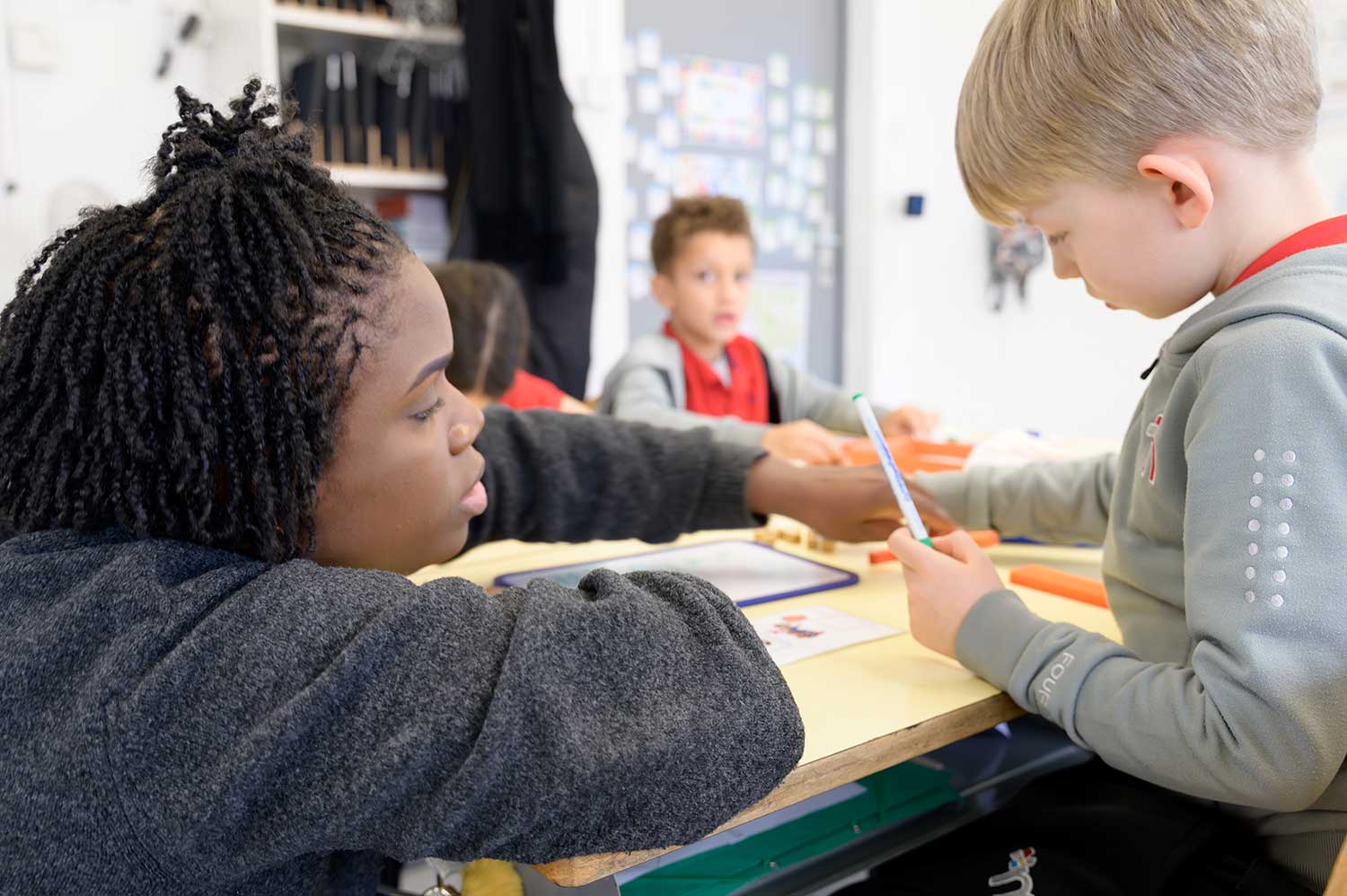
One of the most immediate advantages of a small school like École Mosaic is that our staff are able to see each child as an individual. In large schools, teachers may work with hundreds of students, making it difficult to tailor instruction to each learner’s needs. In a smaller setting like ours, with average class sizes of just 17 students, teachers know each student’s strengths, challenges, and personality, meaning lessons can be adapted in real time and students receive consistent, personalised feedback. This level of attention doesn’t just improve grades—it builds confidence and a genuine love of learning.
Strong relationships at the core of education
At École Mosaic, relationships are not a by-product—they are the foundation. Our students benefit from close connections with teachers, familiarity with peers across age groups and a sense of being known and valued. In larger schools, students can sometimes feel anonymous: in smaller schools like École Mosaic they are visible—and that visibility matters.
Teachers, in turn, are better able to identify emotional or academic difficulties early, support students through challenges and foster trust and open communication.
A safe and supportive environment
Smaller schools like École Mosaic naturally create a more secure and nurturing atmosphere. With fewer students, behavioural issues are easier to manage and address, unkindness between students is less likely to go unnoticed and staff can intervene quickly and effectively. Our students also feel safer taking risks—whether that means speaking up in class, trying a new activity, or expressing themselves in another language.
In larger schools, transitions between classes, teachers, or divisions can feel abrupt and impersonal. At École Mosaic, where many students also live in the local area, students often remain within the same community for years, our teachers collaborate more closely across levels and transitions are smoother and more supportive. This continuity allows our students to develop with confidence, without needing to readjust constantly to new environments.
Greater flexibility in teaching and innovation
Large institutions often rely on rigid systems to manage scale. At École Mosaic, by contrast, we can be far more agile – if something isn’t working, it can be changed—not next year, but immediately.
Our teachers enjoy the freedom to innovate with curriculum design, have the ability to adapt teaching methods quickly and more opportunities to integrate interdisciplinary or project-based learning, such as our annual Science Project and Class Projects, and our whole school Eco-Schools project.
As an ISP LabSchool, our teachers are also all involved in trialling and rolling out new educational technologies which allow them to test new pedagogical methods and save time on administrative tasks which can be reinvested in working with students.
More opportunities to participate and lead
In large schools, competition for roles in sports teams, performances, or leadership positions can be intense. Many students never get the chance to participate fully. At École Mosaic every child has the opportunity to take part and our students can explore multiple interests (arts, sports, academics) and leadership roles – such as our Eco-School Committee – are more accessible. This leads to well-rounded development, rather than early specialisation or exclusion.
A strong sense of community
Small schools such as École Mosaic foster a genuine sense of belonging that is difficult to replicate at scale. Our families experience regular, direct communication with teachers and leadership, more opportunities to engage in school life, such as our Mosaic Parents’ Association, and a collaborative, inclusive culture. Our smaller structure makes it much easier to build a true partnership between parents and educators, giving parents direct access to teachers, a better understanding of their child’s progress through regular in-class visits, and a greater voice in the educational experience.
Students develop in an environment where everyone knows each other, achievements are celebrated collectively and differences are respected. This sense of community strengthens both academic and emotional outcomes.
Holistic development, not just academic performance
Small schools are uniquely positioned to focus on the whole child—not just test results. At École Mosaic our students are encouraged to develop social and emotional intelligence, creativity and curiosity and confidence in communication, through regular presentations, theatre lessons and participation in the annual end of year show. And because all our students are known as individuals, their growth is supported in a balanced and meaningful way.
 A small school supported by a big global group
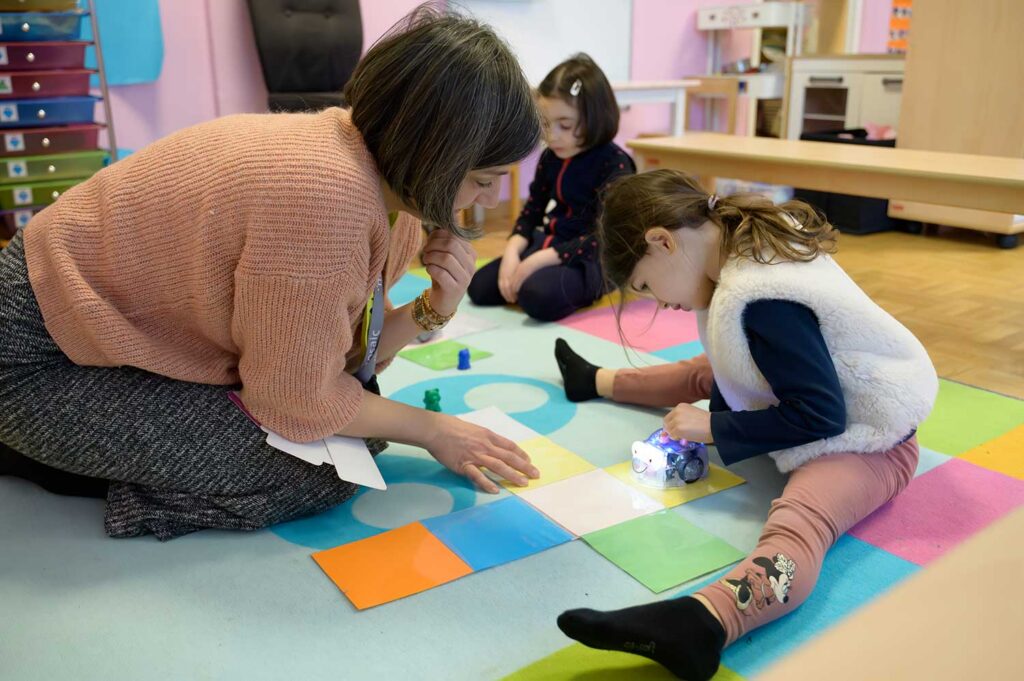
As well as having all the advantages of a small school, École Mosaic also benefits from being part of one of the world’s leading school groups: International Schools Partnership.
Being a member of the group gives us access to numerous resources which significantly improve the quality of our provision. Chief among these is the Regional Learning Director, who supports the school in self-evaluation and school improvement planning and ensures that both the Senior Leadership Team and teachers have access to a huge catalogue of professional development opportunities, keeping pedagogical practices at the cutting edge.
ISP also offers many global learning opportunities for students, enabling them to participate in collaborative educational experiences with other students from around the world, giving our small school a global scale.
Conclusion: Why smaller can be stronger
While large schools may offer scale and resources, smaller schools such as ours offer something arguably more important: depth. Depth of attention. Depth of relationships. Depth of learning.
At École Mosaic, students are not just part of a system—they are at the centre of it. They are seen, supported, and challenged in ways that allow them to thrive academically, socially, and emotionally. For families seeking an education that values the individual as much as achievement, the advantages of a small school like École Mosaic are not just noticeable—they are transformative.